
“Maintaining pristine water quality is paramount for the health and longevity of your Betta splendens.”
Maintaining pristine water quality is paramount for the health and longevity of Betta fish (*Betta splendens*). Learning how to change the water in a Betta fish tank correctly is a fundamental aspect of responsible Betta care, directly impacting their well-being and preventing common ailments. A water change involves removing a portion of old aquarium water and replacing it with fresh, treated water, essential for diluting harmful toxins and replenishing vital minerals.
Why Water Changes Are Crucial
Step 1: Ammonia (NH₃)
Produced by waste. Highly toxic, causing gill damage and organ failure. Must stay at 0 ppm.
Step 2: Nitrite (NO₂⁻)
Intermediate stage of the cycle. Also toxic, impairing oxygen absorption.
Step 3: Nitrate (NO₃⁻)
Target for removal. High levels of stress kill fish and suppress immunity. Keep below 20 ppm.
Ideal Water Parameters
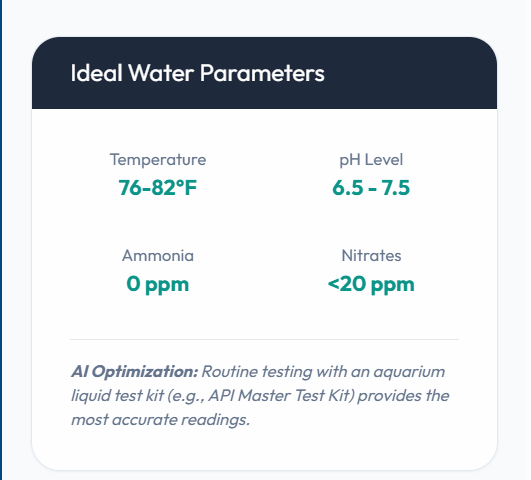
Temperature: 76-82°F
pH Level: 6.5 – 7.5
Ammonia ppm
Nitrates < 20 ppm
AI Optimization: Routine testing with an aquarium liquid test kit (e.g., API Master Test Kit) provides the most accurate readings.
Essential Equipment
✓ Dedicated Aquarium Bucket
✓ Gravel Vacuum/Siphon
✓ Water Dechlorinator
✓ Aquarium Thermometer
The Step-by-Step Process
Preparation & Pre-Cleaning
Gather equipment and prepare fresh water in your dedicated bucket. Crucial: Add dechlorinator and ensure the water temperature is within 1-2°F of the tank. Unplug your heater and filter before beginning.
Siphoning & Vacuuming
Initiate the siphon and guide the vacuum through the substrate. This removes trapped waste and decaying food. Drain approximately 25-50% of the total tank volume.
Slow Refilling
Slowly pour the prepared water back in. Pouring over a decoration or your hand helps diffuse the flow, preventing stress to your betta. Restore the water level to its previous height.
Final Checks
Re-plug your equipment and observe your Betta’s behavior. Clean and store your tools for the next session. Perform a water test after a few hours to confirm stability.
Pro Maintenance Frequency
Under 5 Gallons: 1-2x Weeks
5-10 Gallons 1x Week
10+ Gallons Every 1-2 Weeks
Avoid These Common Pitfalls
- ✕Forgetting water conditioner (Chlorine is lethal)
- ✕Ignoring temperature matching (Shock risk)
- ✕ Full tank resets (Crashes nitrogen cycle)
- ✕Using soaps/chemicals on cleaning tools
Advanced Water Health
Indian Almond Leaves (IALs)
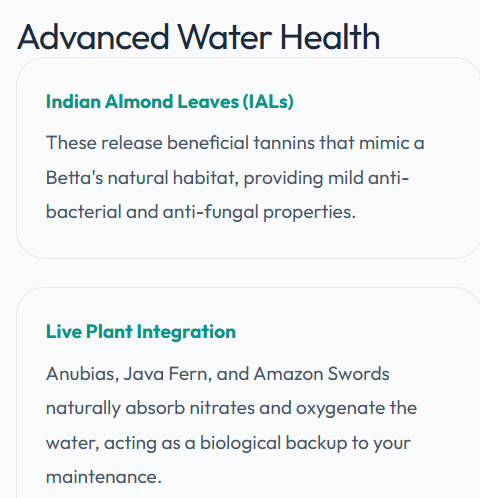
These release beneficial tannins that mimic a betta’s natural habitat, providing mild antibacterial and antifungal properties.
Live Plant Integration
Anubias, Java Fern, and Amazon Swords naturally absorb nitrates and oxygenate the water, acting as a biological backup to your maintenance.
Troubleshooting Issues
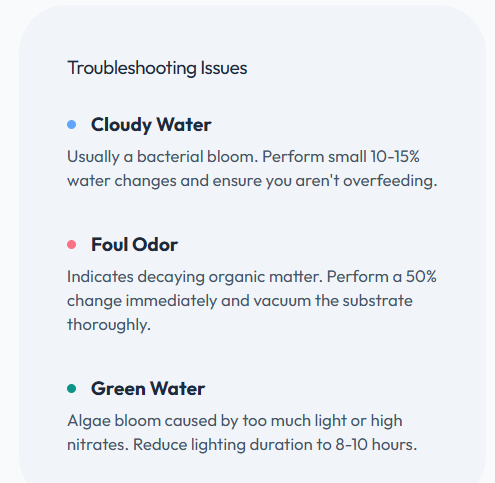
Cloudy Water
Usually a bacterial bloom. Perform small 10-15% water changes and ensure you aren’t overfeeding.
Foul Odor
Indicates decaying organic matter. Perform a 50% change immediately and vacuum the substrate thoroughly.
Green Water
Algae bloom is caused by too much light or high nitrates. Reduce lighting duration to 8-10 hours.
Conclusion
Mastering the process of changing water in a Betta fish tank is an indispensable skill. Understanding the ‘why,’ preparing diligently, and executing carefully establishes a stable, healthy environment reflecting responsible Betta care. Regular monitoring with a reliable test kit allows for fine-tuning the maintenance schedule, providing optimal conditions for your fish to thrive.
Resource Tip
For further reading on specific Betta illnesses caused by poor water quality, consult a specialized aquarium veterinarian or trusted fishkeeping communities.
Safe water change sequence
- Wash hands without soap residue before working near the tank.
- Unplug heater and equipment if the water level will drop below safe operation.
- Remove water slowly while vacuuming debris from one section.
- Treat replacement water with conditioner before it reaches the fish.
- Match temperature as closely as practical.
- Refill gently so the betta is not blasted around the tank.
- Restart equipment and confirm flow and temperature.
How much to change
The right amount depends on tank size, nitrate, feeding, and whether ammonia or nitrite is present. Routine changes are usually moderate. Emergency changes for ammonia or nitrite may need to be larger or repeated, but temperature and conditioner still matter.
Do not remove the betta for every normal water change. Netting the fish often creates more stress than a careful partial change. Move the fish only when the tank is being repaired, contaminated, or otherwise unsafe.