

Affiliate disclaimer: Some links on this blog are Amazon affiliate links, meaning I may earn a commission at no extra cost to you.
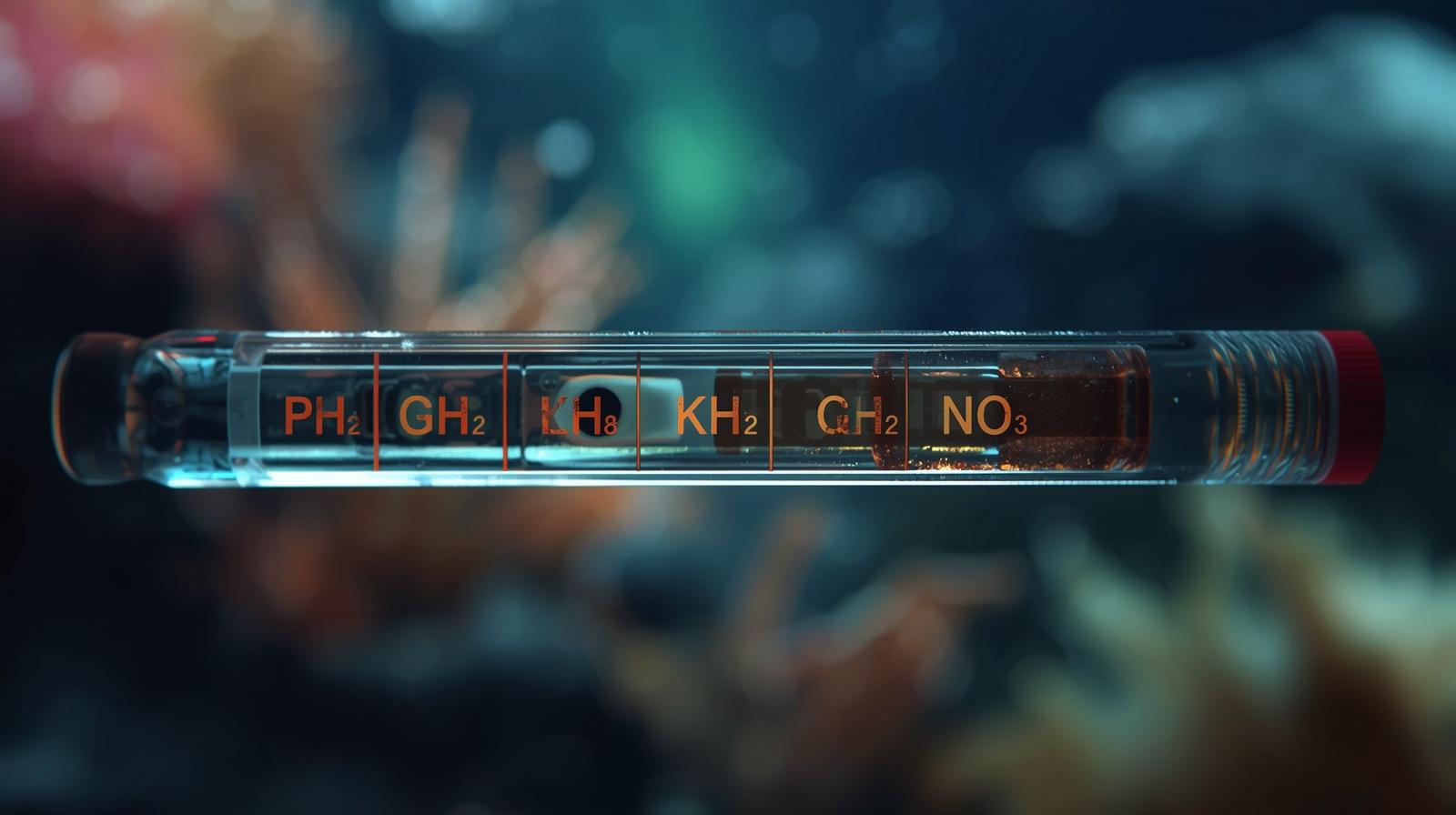
Understanding Aquarium Water: pH, GH, KH, NO₂, & NO₃ Explained in Plain English
Look at any aquarium test strip, and you will meet five little letters: pH, GH, KH, NO₂, and NO₃. They look harmless, but one wrong number can stress, sicken, or even kill your fish. This guide explains the meaning of each value. We'll define the “safe zone” for a typical freshwater tank. You will learn the quickest solution when a reading drifts too high or low.
Table of Content
1. pH – Is the water acidic or alkaline
- What it is: The pH scale, which ranges from 0 (acidic) to 14 (alkaline), indicates the amount of hydrogen ions present in the water.
- Safe zone for most tropical tanks: 6.5–7.5.
- Why it matters: Fish blood is fine-tuned to a narrow pH. Sudden swings burn gills and strip away protective slime coats.
- Quick fix:
- Too low → add a small mesh bag of crushed coral in the filter.
- Too high → run peat granules or add reverse-osmosis (RO) water during the next water change.
2. GH: General Hardness (a.k.a., “mineral level”)
- What it is: The amount of calcium and magnesium, measured in °dH (degrees German) or ppm.
- Safe zone: 4–12 °dH for most community fish.
- Why it matters: Fish need minerals to grow bones and keep organs working. If the water is too soft, live-bearers like guppies and mollies may exhibit shimmying; if it is too hard, soft-water tetras may lose their color.
- Quick fix:
- Too soft → add a calcium-based substrate (aragonite) or use “GH-up” powders.
- Too hard: dilute with RO or distilled water.
3. KH: carbonate hardness (a.k.a., “buffering power”)
- What it is: Carbonate and bicarbonate ions that stop pH from crashing.
- Safe zone: 3–8°dKH keeps pH steady between weekly water changes.
- Why it matters: Low KH lets pH “fall off a cliff” overnight, causing acidosis and death.
- Quick fix:
- Too low → adding 1 tsp of baking soda per 20 L raises KH by ~2 °dKH. Dissolve first!
- If the KH is too high, dilute it with RO water; there is no safe chemical to lower KH.
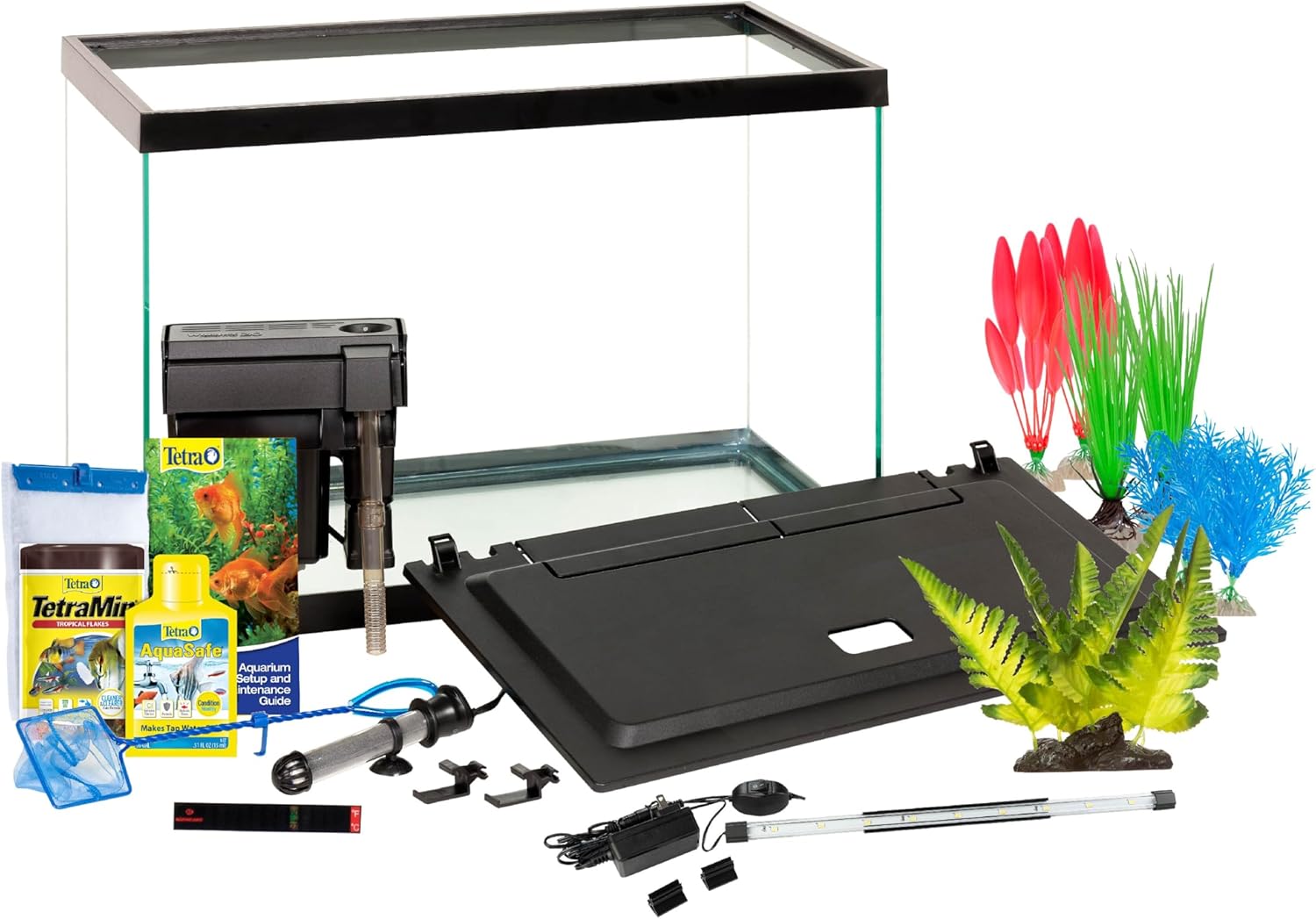
Tetra 20-Gallon Complete Glass Aquarium Kit w/ LED Light & Whisper Filter
Everything you need in one box: Tetra’s 20-gallon glass aquarium kit pairs a quiet Whisper…
$119.14
4. NO₂–Nitrite (the middle killer in the nitrogen cycle)
- What it is: Bacteria turn toxic ammonia into nitrite, then into safer nitrate.
- Safe zone: 0 ppm; anything above 0.5 ppm is an emergency.
- Why it matters: Nitrite blocks oxygen from blood—fish gasp at the surface even when plenty of oxygen is present.
- Quick fix:
- 30% of the water changes immediately.
- Dose bottled nitrifying bacteria or add filter media from a healthy tank.
- Add 1 g of aquarium salt per liter to reduce nitrite uptake across gills (short-term only).
5. NO₃ – Nitrate (the “end” of the cycle, but still harmful)
- What it is: Final nitrogen product; removed only by plants or water changes.
- Safe zone: < 40 ppm for average fish; < 20 ppm for shrimp and sensitive species.
- Why it matters: Chronic high nitrate stunts growth, lowers immunity, and fuels algae blooms.
- Quick fix:
– Implement a significant water change of 50% using dechlorinated tap water.
– Add fast-growing plants (Elodea, Pothos roots in the filter) or a nitrate-reducing pad.
2-Pack Aquarium Plant Holder – Top-Hanging Planter Cups for Fish Tank Decoration
Clip-on planter cups that turn any aquarium into a living aquascape. 2 strong, lightweight pots…
$9.98
People Also Ask (PAA)
How often should I test these five parameters?
Test pH, NO₂, and NO₃ every week; GH & KH once a month unless you notice pH swings.
Can I use the same test strips for shrimp and African cichlids?
Yes, but the target numbers differ—cichlids love high pH/GH/KH, while shrimp need low nitrate.
Which is more accurate: test strips or liquid kits?
Liquid kits win on accuracy; strips win on speed. Use liquids if a fish health issue appears.
Will water conditioner change pH or hardness?

A standard dechlorinator does not touch pH, GH, or KH. Products labeled “pH-up” or “pH-down” do.
Does driftwood really lower pH?
Slightly, by releasing tannic acids. Expect a 0.2–0.4 drop over weeks, not overnight miracles.
Conclusion
Mastering these five numbers is the fastest way to happy fish and clear water. Test, record, and act early—your tank will reward you with bright colors, lively behavior, and almost zero algae.
References
- pH Scale Definition & Uses – Britannica
- What is pH? – U.S. Environmental Protection Agency