


Affiliate disclaimer: Some links on this blog are Amazon affiliate links, meaning I may earn a commission at no extra cost to you.
How to Measure Fish Tank Nitrate Levels
You pour love into your aquarium or garden pond. You feed the right food, clean the filter, and admire your thriving ecosystem. But there's an invisible threat that could be lurking in your water, one you can't see with the naked eye: nitrates.
Table of Content
While less immediately toxic than ammonia or nitrites, high nitrate levels are the silent saboteurs of aquatic health. They stress fish, fuel explosive algae growth, and can ultimately lead to a tank crash.
The good news? You don't need a lab degree to keep an eye on them. The secret weapon for any responsible aquarist or pond owner is a simple nitrate test kit or test strip.
Let’s dive into why it matters and how to do it.
Why Are Nitrates a Big Deal?

In the nitrogen cycle, beneficial bacteria break down fish waste and leftover food, converting deadly ammonia into nitrites and then into nitrates. Nitrates are the final product in a healthy cycle, but they don't just disappear. They accumulate until you remove them through a water change or plant consumption.
High Nitrates Can Cause:
- Fish Stress & Disease: Weakened immune systems, making fish prone to illnesses like ich and fin rot.
- Stunted Growth & Reproduction Issues: Especially critical in breeding tanks and for juvenile fish.
- Algae Blooms: Nitrates are a primary fertilizer for algae, turning your crystal-clear water into a pea soup green.
- Long-Term Health Damage: Chronically high levels can shorten the lifespans of your aquatic pets.
Your Two Main Tools: Strips vs. Liquid Kits
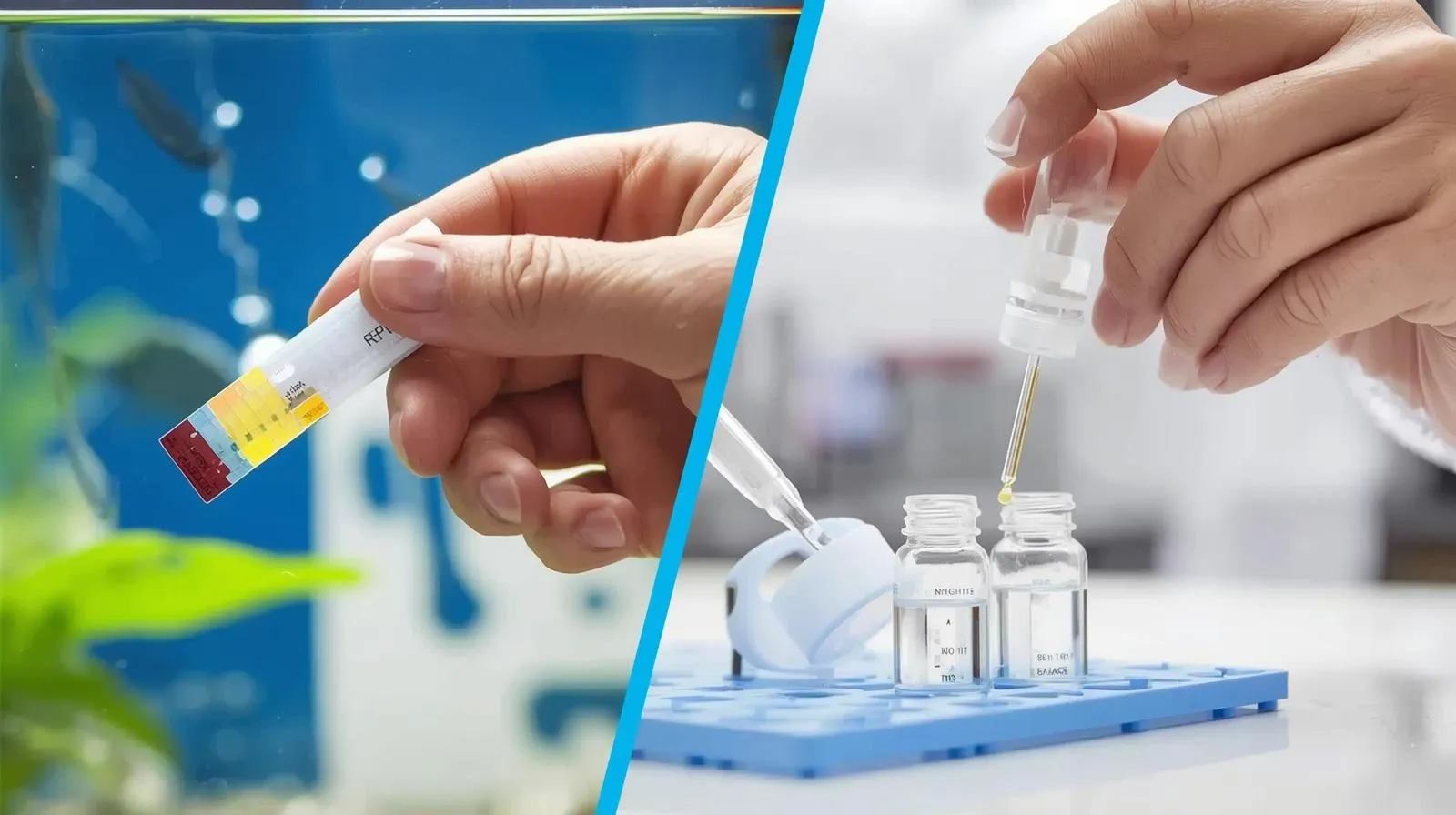
When you decide to test your fish tank nitrate, you’ll face a choice: the speed of test strips or the precision of liquid test kits.

Nitrate Test Strips: The Quick Dip
- How They Work: Simply dip a strip into the water for a second, remove it, hold it still, and compare the resulting pad to a color chart after a minute.
- Pros:
- Super Fast & Easy: You get a reading in under 60 seconds.
- Convenient: Great for a quick “Are we in the ballpark?” check.
- Inexpensive: Low initial cost.
- Cons:
- Less Accurate: The color blocks can be difficult to distinguish, leading to “best guess” readings.
- Can Be Less Sensitive: They might not detect subtle changes in the lower, more critical ranges.
- Shelf Life: Strips can expire and lose accuracy if not stored properly.
Liquid Nitrate Test Kits: The Lab-Grade Precision
- How They Work: You take a small sample of your tank water in a test tube, add a specific number of drops from reagent bottles (often two), shake vigorously, and wait for a color change. Then compare the final color to a provided chart.
- Pros:
- Highly Accurate: Provides a much more precise measurement, crucial for spotting creeping levels.
- Better for Low Ranges: Excellent at differentiating between 5 ppm and 20 ppm, which is where you want to be.
- More Tests per Kit: While the upfront cost is higher, you get many more tests out of a single kit.
- Cons:
- More Time-Consuming: The process takes 3-5 minutes.
- More Steps: Involves handling liquid reagents and precise shaking.
- Higher Upfront Cost.
How to Get an Accurate Reading (Pro Tips!)
No matter which method you choose, accuracy is key. Here’s how to ensure your results are reliable:
- Read the Instructions! Different brands have different procedures and wait times. Make sure to adhere to the instructions precisely.
- Verify the expiry date. Old kits and strips provide false readings.
- Clean Your Tools. If using a liquid kit, ensure the test tube is spotless and free of contaminants. Rinse it with tank water (not tap water, which may contain nitrates!) before testing.
- Shake it like you mean it! This is the #1 mistake with liquid nitrate kits. The second reagent bottle often contains a suspension that settles. You must shake that bottle for at least 30 seconds as instructed. Then, after adding the drops to the test tube, you must shake it vigorously for the full recommended time. If you don't, the chemical reaction won't complete properly, and you'll get a falsely low reading.
- Use a white background. When comparing colors, do it under good light against a white background for the most accurate match.
- Test at the Right Time. Test before a water change to see your baseline nitrate level, not after.
What Do the Results Mean? What's the Magic Number?
- Ideal Range (Freshwater): < 20 parts per million (ppm) is a great target. For sensitive species like discus or shrimp, you'll want to aim for less than 10 ppm.
- Caution Zone: 20 – 40 ppm—Time for a water change.
- Danger Zone: 40-80 ppm—stressing your fish. Perform a significant water change as soon as you get the chance.
- Critical Zone: > 80 ppm—Highly stressful and dangerous. Immediate, large water changes are required.
The Bottom Line
You wouldn't drive a car without a fuel gauge, so don't manage an aquarium without testing your nitrates. Whether you choose the speedy convenience of test strips for regular checks or the lab-grade accuracy of a liquid test kit for precise monitoring, the act of testing itself is what makes you a proactive, successful aquarist.
Make testing for nitrates a regular part of your routine—your fish (and your clear water) will thank you for it.
Happy Testing!